
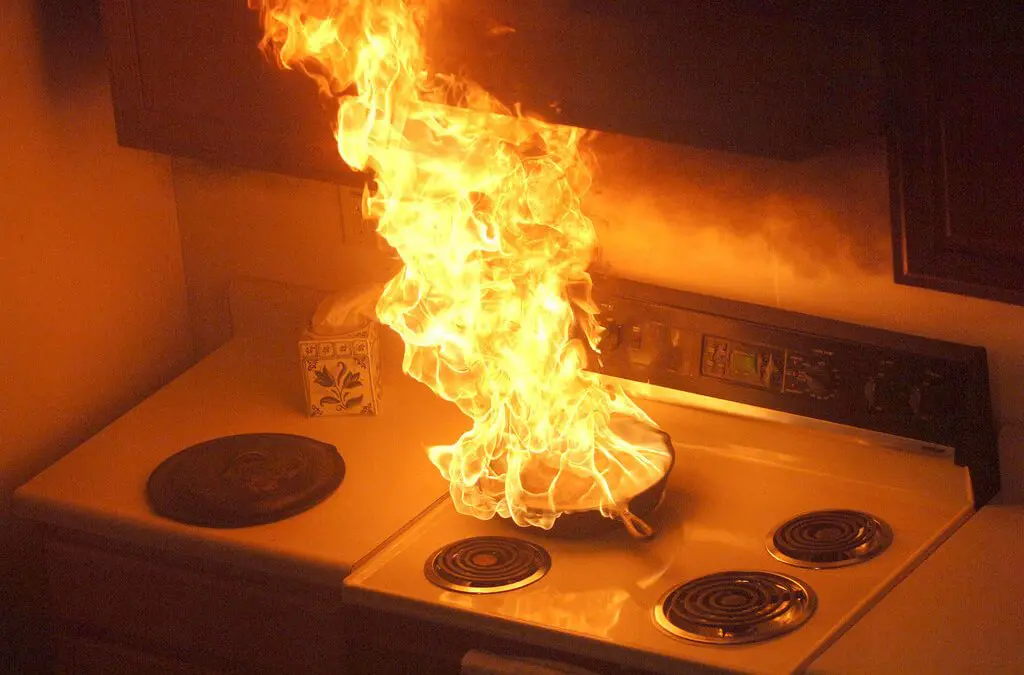
Most residential fires don’t start from dramatic or unpredictable causes. They start from a short list of common, recurring situations: unattended cooking, electrical equipment failures, heating appliances placed too close to combustibles, and the absence of functional smoke detection that allows a small fire to grow unchallenged before anyone realizes it’s happening. The homeowners who experience the least house fire risk have addressed the conditions that allow fires to start and spread.
The Leading Causes of House Fire and How to Address Them
Cooking is the leading cause of residential house fire in the United States, responsible for nearly half of all home fires annually. The common thread is unattended heat. Staying in the kitchen when something is on the stovetop is the single most effective prevention habit. When something does catch fire on the stove, covering the pan with a lid smothers the flame. A kitchen fire extinguisher mounted within reach is the backup that keeps a small fire from becoming a house fire. Electrical failures are the second most common cause of house fire deaths, and they’re particularly dangerous because they often start inside walls or attics, allowing a fire to grow before it’s visible. Breakers that trip frequently, outlets warm to the touch, flickering lights, or a burning smell without a source are signals that warrant professional assessment.
Heating equipment, particularly portable space heaters, is the leading cause of house fire deaths during winter months. A space heater placed too close to curtains or bedding, or left running unattended, creates conditions for rapid fire growth. The three-foot clearance rule, nothing flammable within three feet of any heat source, is the foundational practice. Space heaters should never run in an unoccupied room or while sleeping.
Smoke Detection and the Critical Role It Plays in Survival
A working smoke detector is the single most impactful house fire safety investment, because it provides early warning that makes escape possible before conditions become unsurvivable. Placement on every level of the home, in every sleeping room, and outside every sleeping area provides comprehensive coverage. Testing monthly and replacing batteries annually is the maintenance routine that keeps detection functional. Detectors more than ten years old should be replaced regardless of apparent function; the sensing element degrades over time, and the manufacture date printed inside every unit confirms when replacement is due. Combination detectors that sense both fast-flaming and slow-smoldering fires provide the most comprehensive coverage in a single unit.
Planning for a House Fire Before One Happens
Preventing a house fire and surviving one are related but separate preparations, and both are necessary. A home escape plan is the preparation that determines whether a house fire becomes a fatality. NFPA data shows occupants have as little as two minutes to exit a burning home once a smoke alarm sounds. A practiced plan eliminates the hesitation and disorientation that cost lives in those two minutes. Closed doors are one of the most underappreciated house fire survival tools. A closed bedroom door can dramatically reduce temperatures in the room compared to an open one, providing additional escape or rescue time. Sleeping with bedroom doors closed is a habit that has saved lives in documented incidents where open doors proved fatal.
Frequently Asked Questions (FAQs)
What type of smoke detector is best for preventing house fire deaths?
Ionization detectors respond more quickly to fast-flaming fires. Photoelectric detectors respond more quickly to slow-smoldering fires, more common in bedroom fires involving upholstered furniture. The NFPA recommends having both types or using combination detectors that incorporate both sensing technologies. A combination detector in each required location provides the most comprehensive house fire protection in a single unit.
How do I properly use a fire extinguisher?
Residential fire extinguishers are for small, contained fires. The PASS technique: Pull the pin, Aim at the base of the fire, Squeeze the handle, Sweep side to side. Ensure your back is to an unobstructed exit before engaging. If the fire is larger than a wastebasket, get out, close doors behind you, and call 911 from outside.
How often should I clean my dryer vent to reduce house fire risk?
Annual cleaning is recommended for most households, and more frequently if drying times have increased, a sign of restricted airflow. The U.S. Fire Administration attributes approximately 2,900 dryer fires annually to failure to clean the vent. Clean the lint trap after every load and have the full duct professionally cleaned or cleaned with a dryer vent cleaning kit annually.
Is a sprinkler system worth installing for house fire protection?
Residential sprinkler systems activate automatically, respond within seconds of detecting heat, and dramatically reduce both fire spread and fatality risk. The primary barrier is cost; installation in an existing home typically runs $1 to $2 per square foot, though insurance premium reductions often offset a portion over time.
What should I do immediately if a house fire starts?
Alert everyone and get out; don’t stop for belongings. Close doors behind you to slow fire and smoke spread. Once outside, stay outside and call 911. Meet at the designated outdoor meeting point and account for all occupants. If you encounter smoke while exiting, stay low where air is cleaner. If a door feels hot before opening, use your alternate exit.
Buyer’s Edge offers home inspections to customers in Western North Carolina. Contact us to request our services.